Extra mile to become more accountable to children

This blog from Geert de Jong, Manager Expertise & Development at Help a Child, was previously published on the CHS Alliance website.

CHS Alliance member Help a Child has undergone a remarkable transformation by embracing verifying against the Core Humanitarian Standard (CHS). To mark their transition from Independent Verification to Certification, we hear from Geert de Jonge, Manager Expertise and Development at Help a Child, on how their commitment to quality and accountability has significantly enhanced the organisation’s impact for the people they support.

“The process to achieve certification against the CHS has been very helpful. We now have a clearer understanding of where systems, policies and practices are strong and effective and where further improvement is needed. The detailed, incisive audit report has helped us to improve. The entire process was an excellent opportunity to put the CHS at the forefront of the entire organisation and realign our activities and procedures accordingly. The CHS motivates us to walk the extra mile when it comes to meeting the highest quality standards.”
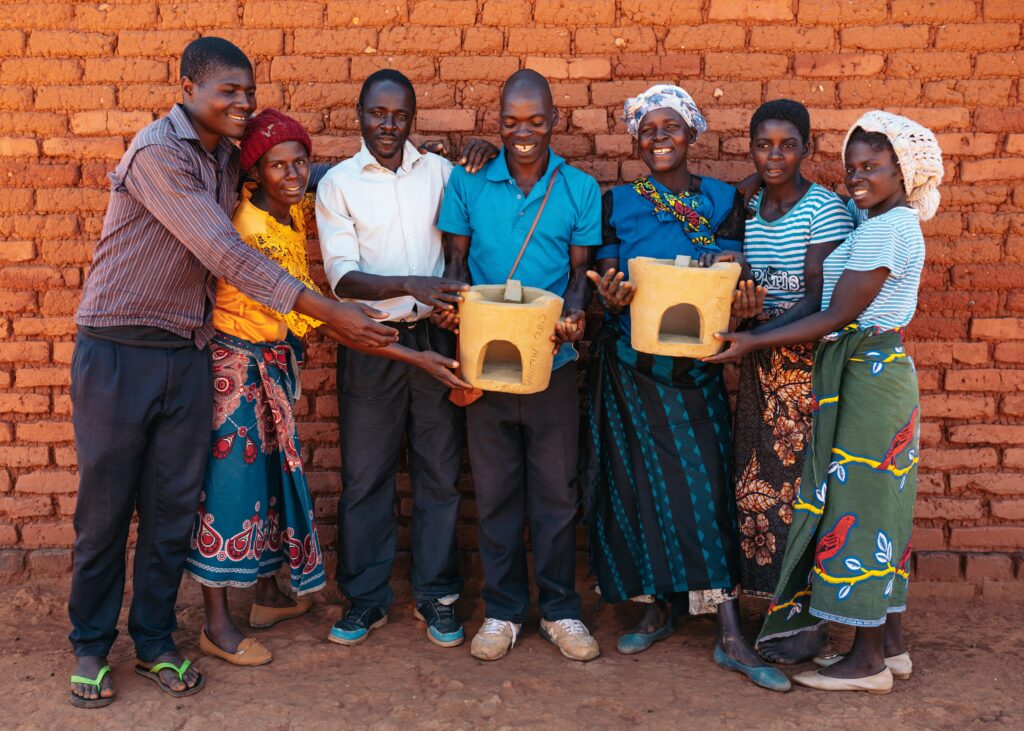

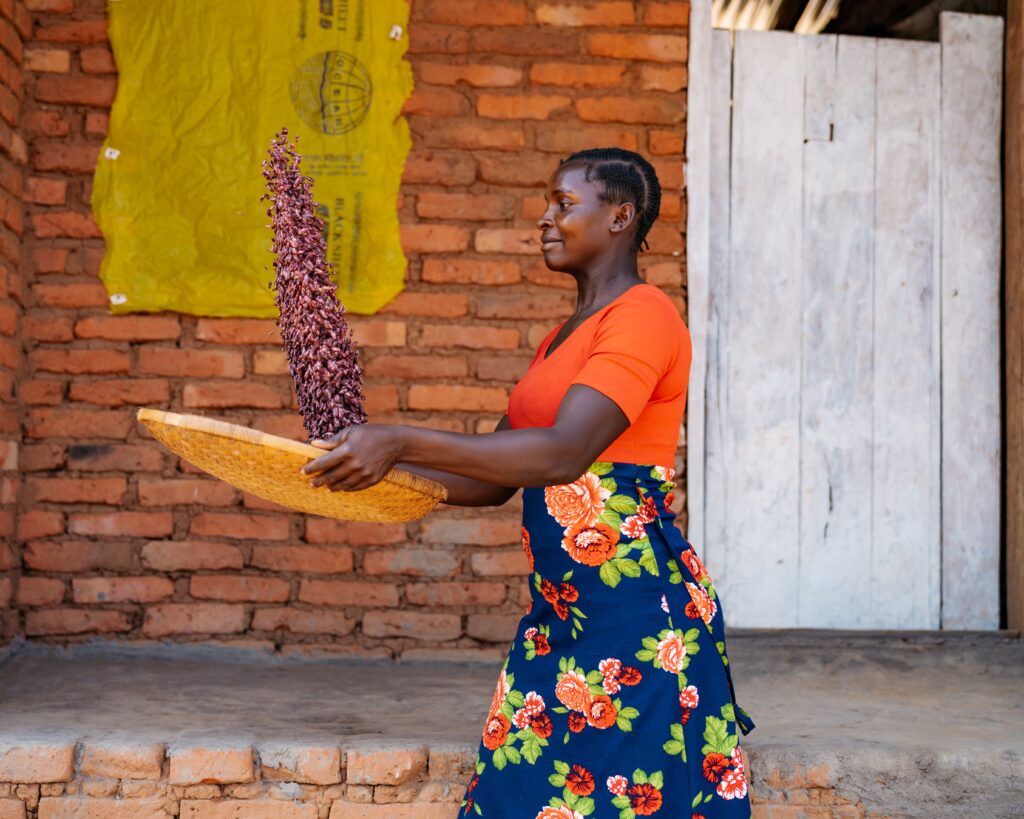
A community youth group with new climate smart stoves, supported by Help a Child partners in 2023. Credit: Serrah Galos/ Help a Child

The most important pillar of our strategic plan is achieving higher quality and impact. Our reason for existence is to provide a future for children in need. We do our utmost to accomplish this, and quality is our driving force. Now, by achieving CHS Certification through HQAI, we show the world that we take our commitment seriously. Being able to show that we meet this standard motivates us to continue to live up to our foundational ambition. The yearly maintenance audit of certification also gives us an extra external drive to make it a continuous priority.

As a member of the Dutch Relief Alliance, we are mandated to take part in CHS Certification, and thoroughly welcome this encouragement to meet our commitments. In fact, we think all donors should look at how they can use the CHS to support those they fund to improve accountability for the ‘end user’ – those we help.

Verifying against the CHS has instilled a culture of continuous improvement within Help a Child. By adhering to the nine commitments of the CHS, the organisation ensures its programmes are relevant, timely and effective. This structured approach has led to a more transparent and accountable operational framework, which is crucial for maintaining trust with stakeholders and people affected by crisis.

Here are the key improvements we’ve made:
• Community-Based Feedback: While Help a Child has long valued participation and feedback, after we started verifying against the CHS we organised meetings with community representatives to co-design feedback and complaint mechanisms. Each project subsequently chose its own mix of feedback channels, such as suggestion boxes, community meetings and hotlines. One exciting example of this was a child-led feedback mechanism in South Sudan, allowing children to actively express their feedback and complaints. This initiative provided valuable insights into how children perceive our projects and offered guidance on further improvements.
• Knowledge Management: In 2018, during a synthesis evaluation of all our projects, we realised that just creating high-quality policy documents is not enough. It is all about ensuring we reach the hearts and minds of our field staff so that they understand and live by our philosophy. We introduced all kinds of training, information exchange, and e-learning. For example, we began a Community of Practice for all staff and partners to share learnings on priority topics like Early Childhood Development, Child Protection and Disaster Response.
• Disaster Risk Reduction: Up to 2019, we were organised in silos: one silo for development programmes and one silo for disaster response. As an important discourse, Triple Nexus came up in our sector, and CHS pushed us to connect development with disaster response. This resulted in more attention to Disaster Risk Reduction in our development programmes and more sustainability and empowerment approaches in disaster response.
• Partnership Management: Supported by the CHS process, we have improved equal partner relationships and become more transparent in our relationships with our implementing partners. We created new Memoranda of Collaborations with partners, emphasizing more the equality in the relationship and our vision on partnership. We also started a Community of Practice with the CEOs of our partners to discuss strategic topics, ensuring decisions are taken together.
• Communication with communities: during the external audit in 2023, we realised we need to improve on the intensity and quality of our communication to affected people, explaining who Help a Child is as the donor behind our implementing partners and what integrity means to us.

As a result of all these changes, Help a Child has seen a notable improvement in our relationships with the communities we support. The CHS commitments emphasise accountability to affected people, ensuring that their needs and feedback are central to the organisation’s operations. Taking this participatory approach has led to more inclusive and responsive programmes, ultimately resulting in better outcomes for the communities served.

After several years of using the CHS to improve our work, it was great to get confirmation from the CHS audit report that the communities we help feel “…that Help a Child and its partners take the time to understand what the community has and does not have and to identify the most vulnerable.”

Member of a community youth group supported by Help a Child partners in 2023. Credit: Serrah Galos/Help a Child

Achieving CHS certification has also boosted donor confidence in Help a Child. As a relatively small NGO, the CHS opened up new avenues for further funding by larger donors, enabling us to provide more impact for more children in need. We expect and encourage more and more donors to adopt the CHS standard and, by doing so, increase the level of CHS compliance – meaning every group helping potentially vulnerable people are meeting those fundamental commitments. We want to work in this world.

Overall, Help a Child’s journey with CHS Alliance and verifying against the CHS has been transformative. The organisation has not only improved our internal processes but most significantly changed the power dynamics between us and those we serve. Through our commitment to CHS verification, we will continue to build trust, foster empowerment and deliver sustainable solutions to those in need.
 

E2P evidence review publication


We are proud to let you know that we have published our first consolidated evidence review of our Empowered to Protect (E2P) approach, which we implement in the Democratic Republic of the Congo and Burundi.

E2P is Help a Child’s community-based intervention for the prevention of gender-based violence. The initiative revolves around interactive group sessions where participants are encouraged to delve deeply into the root causes of gender-based violence. The program can be combined with distribution of non-violent self-defense tools called the INVI-bracelet to be used as last resort prevention when an attack is already happening.

The critical examination of social and cultural norms and practices raises awareness for gender-based violence, empowering both men and women of the community to recognize and tackle these issues proactively. Through E2P, participants become agents of change in their own environment by making them aware of the ways that they can prevent and respond to gender-based violence, fostering resilience and increasing feelings of safety. It is part of Help a Child’s holistic approach to work for the good of children, families and the entire community.

This paper is not only a summary of our past projects, but a collection of evidence of the impact of E2P, recommendations and lessons learned during the innovation journey.

Read our evidence review report


Impact report 2023 published

2023 was once more a year of global challenges. An unprecedented number of people worldwide were displaced from their homesteads and had to flee or find shelter elsewhere. At the same time, there is a decrease in official development aid and support for the least developed countries worldwide and a decline in international solidarity.

Despite these challenges, we are grateful that we succeeded in our mission to give more, better, and faster support to children and communities in 2023. Standing firm in turbulent times, we saw growing interest in our way of working for children and engaging communities. Our early childhood development expertise area has attracted more attention internationally, which is very promising. We found that staying focused on what we do well pays off. Recognition of our expertise and value in (child) protection has brought us into collaboration with large INGOs and the US in the DRC. Acknowledgement of our strong knowledge of problems and solutions in early childhood development in Rwanda enabled us to co-develop and design a USD 10 million grant with UNICEF and the Rwandan government on ECD. Our effectiveness is demonstrated in projects like Kids@Risk in the DRC. Our projects are well integrated in local governments and society. Also, we have been given the opportunity to certify at the Core Humanitarian Standard after completing an audit performed by Humanitarian Quality Assurance Initiative.

We are very pleased and proud to tell that we have finalized and published our 2023 impact report. Our report is not only an overview of our activities and finances but it tells our story. This story will bring you to different places in the world where we help hundreds of thousands of children to grow out of poverty towards a promising future. Travel with us on our journey, on the way we will tell you of the choices we made, how we learned and adjusted, and the impact we made reaching our annual destination.

Read our impact report

Help a Child CHS certified

Since January 2024, Help a Child is certified against the Core Humanitarian Standard! We passed the rigorous scrutiny by the independent certification body HQAI – Humanitarian Quality Assurance Initiative. Our certification objectively demonstrates that we comply with the requirements of the CHS. It means that we put affected children and populations at the center of our programmes, include their feedback and opinion in our work and create programmes based on the needs of people. Geert de Jonge, Manager Expertise and Development, tells more about our certification journey during an interview conducted by HQAI.

Why did you decide to go from independently verified to certified?
“The most important pillar of our strategic plan is achieving more quality and impact. Our reason of existence is providing a future for children in need. We do our utmost to accomplish this and quality is our driving force. To aim for certification shows the world that we take our commitment seriously. Being part of a select group of professional organizations that meet this highest standard, motivates us to continue to live up to this ambition. The yearly maintenance audit of certification gives us an extra external drive to make it a continuous priority.”

Can you tell us more about your HQAI certification journey?
“We started our CHS journey in 2019 with our first self-assessment and we repeated this in 2022. Both of these self-assessments have resulted in improvement plans for the organization, pushing us to develop more effective and quality aid. In 2023 we have done the external audit and the reflections of the auditors have helped us to further grow. Looking back at this journey, we really improved in quality in for example Community Based Feedback, Knowledge Management, Disaster Risk Reduction, Partnership Management and communication with communities.”

What were the challenges you encountered?
“The investment of time and resources of the external audit were challenging, but outweighs the benefits of identifying sharp and critical ways of improvement. As a relatively small NGO the CHS pushed us far, but also opened up new avenues for further funding by larger donors enabling us to provide more impact for more children in need.”

What specific improvements have you seen?
“Community Based Feedback: in 2019 this was a completely new topic for us. We have always invited the communities to share their feedback, but now we have been able to setup a clear mechanism for channelling this feedback and responding to that feedback. This is a very visible improvement at Help a Child, from policy level to field level.

Knowledge Management: we realized in 2018 during a synthesis evaluation of all our projects that just creating high quality policy documents is not enough. It is really all about how to ensure we reach the hearts and minds of our field staff so that they understand and live by our philosophy. We introduced all kinds of trainings, information exchange, e-learnings and started with Knowledge Management as an important pillar in our organization.

Disaster Risk Reduction: up to 2019, we were organized in silos: one silo for development programmes and one silo for Disaster Response. Triple Nexus as an important discourse came up in our sector and also CHS pushed us to really connect development with Disaster Response. This resulted in more attention for Disaster Risk Reduction in our development programmes and more sustainability and empowerment approaches in Disaster Response.

Partnership Management: with the support of CHS we have been able to improve on equal partner relationship, and becoming more transparent in the relationship with our implementing partners. Our multi-annual contracts changed accordingly and we have further invested in the relationship with our  implementing partners.

Communication with communities: during the external audit in 2023, we realized we need to improve on the intensity and quality of our communication to our beneficiaries, explaining who Help a Child is as the donor behind our implementing partners and about what integrity means to us. In the following years we  want to further improve quality on this topic.”

What was your experience of collaborating with the HQAI auditors?
“The auditors were incisive and analytically proficient, directing our organization to the right points and ensuring that this did not feel like a paper audit but really contributed to clear areas of improvement at policy and field level. We appreciated their support and their push to further improve our quality.”

What are the expectations from donors now that you will be CHS certified? Do you think they will change?
“We expect more and more donors to adopt the CHS standard and by doing so increase the level of CHS compliance. For us, CHS is the highest quality standard and by adhering to it we see possibilities to further diversify our donor portfolio adhering to the highest compliance requests.”

In summary, what impact has the certification had on your work?
“The process to achieve certification has been very helpful. We now have a clearer understanding of where systems, policies and practices are strong and effective, and where further improvement is needed. The detailed incisive audit report has helped us to improve. The entire process was an excellent opportunity to put the CHS at the forefront in the entire organization and realign our activities and procedures accordingly. The CHS motivates us to walk the extra mile when it comes to meeting the highest quality standards.”

Read the shared interview with Tearfund and the Dutch Relief Alliance


Leading the South Sudan Joint Response

In South Sudan, there is great unrest: millions of people are affected by violence, hunger, or the consequences of climate change. Amidst all this unrest, it is not possible to set up our multi-year village program, but working together with families can be done.

In the coming three years, Help a Child is leading the South Sudan Joint Response (SSJR). From 2024-2026, we are committed to helping people in South Sudan suffering from hunger, lack of clean drinking water, and living in unsafe situations with their families. We do this together with our partners from the Dutch Relief Alliance: Care, Dorcas, Plan International, Save the Children, Tearfund and War Child Holland, and with South Sudanese organizations Across, ADA, Aid Link, CEF, Coalition for Humanity, SAADO, UNIDOR, and WOCO. A great opportunity to work together for a better future for children in South Sudan!

517,932 people
Within the SSJR, Help a Child will mainly be active in the regions of Pibor and Tonj North, but humanitarian assistance will also be provided in Melut, Malakal, Akobo, Rubkona, Mayendit, and Abyei. The goal is to reach 517,932 people with this assistance over three years. Help a Child focuses on the protection and education of young children. Other organizations will focus on food security and livelihoods, water supply, hygiene, and food for children and pregnant women.

Strong people
In the areas where we work, people especially want to get to work themselves. Something that fits well with the approach of Help a Child. Sonja, humanitarian expert in South Sudan, says: “In 2011, the country became independent, but since then, there have also been countless internal conflicts resulting in millions of refugees and poverty. I see that people carry traumas with them. And I see strong people. A population that does not give up, is proud of the country, and does not want to remain dependent on external aid. (…) Restoring that dignity: that is the impact of our work, and that’s what I am committed to.”

SSJR Information Leaflet

Every child needs peace

Is there still hope for children whose lives consist of moving from place-to-place running from rebels’ atrocity?

The security situation in Masisi territory has always been unstable. However, since 2022 it has taken a different turn. According to the IOM UN Migration Global data institute, on February 4, 2023, the Army forces of the Democratic Republic of Congo (FARDC) were the target of multiple M23 attacks in eastern DRC, near the town of Sake, more specifically in the villages of Karenga, Kabati and Kingi, in the Kamuronza groupement in Masisi territory. These violent clashes spread to several villages in Masisi territory, reaching the center of Mushaki, some 12 km from the town of Sake.

As if it was not enough, The M23 rebels took control of the town of Matanda, in the Masisi territory (North Kivu), following the fighting that has pitted them against the FARDC since early Friday December 22nd trying to occupy the Rugogwe-Kirumbu and Kitshanga-Kibarizo axes, as well as the Muhanga-Bashali Mukoto road.

These constant forced movements exacerbate the health risks and safety of the displaced populations calling for humanitarian help in shelter, health, and psychological support, sanitation, nutrition, Education, and protection. Women and children are the main victims; they are particularly at risk of sexual abuse and violence. People with disabilities face difficulties in accessing basic services due to several barriers, including physical barriers, and particularly the lack of reasonable accommodation for accessibility, but also a lack of services adapted to their specific needs.

There still hope! Help a Child DRC together with our partners and doners act in making sure children are safe, their well-being improved, and their rights respected by implementing programs that enhance children’s wellbeing and the community around them through education, protection, nutrition, economic empowerment, and Wash in Masisi territory, Nyiragongo territory, North-Kivu.

After severe drought, now intense floods in Somalia

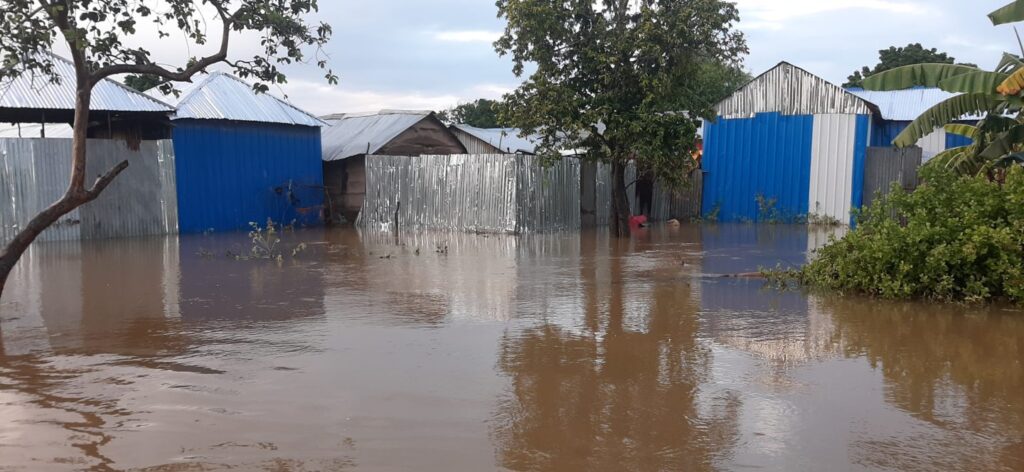
Due to heavy rainfall, 2.4 million people in Somalia have become victims of flooding. Therefore, Help a Child provides emergency assistance in the areas around Kismayo and Baardheere for the next six months.

From October to December, Somalia experiences its rainy season. Intense rainfall caused several rivers to overflow, leading to flooding in parts of Somalia. In Baardheere, 42,236 people fled their homes, and in Kismayo 62,605. In total, more than 2.4 million people have been affected by the severe weather and subsequent floods.

Humanitarian crisis
The humanitarian crisis among the affected people is severe: hospitals are damaged, there is a significant shortage of medicines, and medical assistance is limited. Most refugees end up in camps with makeshift shelters, lacking access to basic necessities such as clean water and other hygiene facilities.

Assistance and training
In collaboration with the Dutch Relief Alliance, Help a Child takes action. Over the next six months, we will provide emergency assistance in the areas of health and hygiene. This assistance focuses on vulnerable groups such as (pregnant) women, mothers, and children under the age of five. We involve village communities in providing this assistance. Together with village elders and (youth) leaders, decisions are made on how and from where aid should be delivered. Additionally, we provide training on WASH: water, sanitation facilities, and hygiene.

Climate change
Just six months ago, Somalia was facing the worst drought in forty years. The significant shift now illustrates the impact of climate change on countries like Somalia. Help a Child continues to advocate for children and families there. We are grateful for the additional budget allocated to the Dutch Relief Alliance.

Dutch Relief Alliance
The Dutch Relief Alliance consists of fourteen Dutch humanitarian organizations collaborating with the Dutch Ministry of Foreign Affairs and many local organizations to provide emergency aid in countries such as Somalia and South Sudan.

Partner organization Zamzam gives a video update on the situation in Somalia and the assistance we can offer with the Dutch Relief Alliance.

Watch the video update

Birth certificate makes children in DRC visible

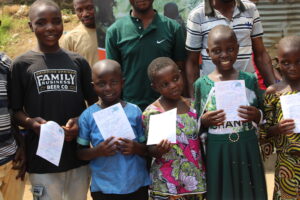
A special event for students and parents from three primary schools in Masisi, DRC. Recently, the first children received their own birth certificates. Over the next few weeks, a total of 1500 children will receive the document proving that they are now registered with the civil registry.

Due to the dangerous and difficult circumstances in DRC, parents are constantly fleeing with their children. Usually, it is not possible for parents to register their son or daughter within nine days of birth. As a result, many children in DRC are stateless and unprotected.

No longer invisible
Help a Child collaborates with the court in Masisi to provide children their birth certificates. This way, children gain an identity, are protected, and are no longer invisible.

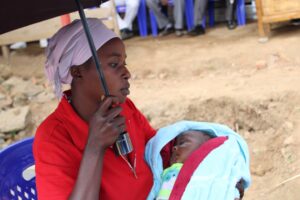
During the kick-off ceremony, the two-month-old son of Furaha received the birth certificate as an example for other parents to make them aware that it is their duty to register children within nine days of birth.

Registering children in Masisi is one of the many activities under the ‘Back to School’ project, where we focus on providing quality education and trauma care for children. Over the next few weeks, in addition to receiving a birth certificate, students will also be given backpacks filled with school supplies.

Grow talent, harvest a future

According to the International Fund for Agricultural Development (IFAD), GDP growth generated by agriculture is more effective in reducing poverty than growth in any other sector. In Sub-Saharan Africa, growth in agriculture reduces poverty up to eleven times faster than growth in other sectors. This is why Help a Child gives special attention to youth participation and empowerment in its agricultural programs.

The report ‘Grow talent, harvest a future’ contributes to the ongoing discussion on how to adequately tackle the immense employment challenges for the youth of today. In order to do this, practical experience from Help a Child’s youth projects in four East-African countries will be compared to a relevant academic framework of the IFAD, called ‘The rural landscape of youth opportunity.’ Most importantly, young people, that have joined Help a Child projects have provided much of the information that can be found in this report. Their insights, challenges, and dreams should always be part of the discussion. The report results in a number of recommendations that should be taken into account by both policymakers and practitioners working with (rural) youth in Sub-Saharan Africa.

Successful MHPSS program for young children developed

Today is World Mental Health Day. A day to reflect on all people who face mental health problems. Such problems are also common in the countries where we work. Due to conflicts and other difficult circumstances, people suffer, both physically and mentally. This is not easy for adults, but certainly not for children. For young children, it is difficult to understand what is going on in such situations. Especially when adults are fighting or their parents are stressed themselves.

This is why Help a Child, TNO and ARQ started a project for children aged 5 to 7 and their parents/caregivers in South Sudan in 2021. This age group reaches little help, even though they urgently need it. This pilot project came as part of the DRA Innovation Fund, which is funded by the Dutch Ministry of Foreign Affairs. It was implemented in Wau and surrounding towns, where active fighting has ceased, but people still suffer from the effects of the prolonged conflict. Build your Own Buddy (BOB) is a group mental health and psychosocial support (MHPSS) program with elements of Cognitive Behavioral Therapy (CBT) and Emotion Focused Therapy (EFT). Based on recent scientific findings, the program provides strategies to recognize and communicate emotions and stress and actively reduce stress levels.

During 12 group sessions, children hear about Bob, the hare. In the colourful storybook, Bob experiences all kinds of adventures. Through various playful exercises, children are taught different strategies for dealing with their emotions. They receive help from their “buddy”, built by themselves from local materials at the beginning of the program.

The parents/caregivers follow a parallel program in which they also hear Bob’s story and do mostly the same exercises to experience how they themselves can deal with emotions and stress. In addition, they receive psycho-education about this so they can help their children deal with emotions, and there is a lot of talking and discussion.

From the cohort study, it was possible to determine that the social-emotional well-being had improved in almost two-thirds of participating children after the BOB program ended. In addition, 82% of parents who participated in the parallel program reported that it gave them the skills to meet their child’s emotional needs. The results of the study in which nearly 380 children and their parents participated were statistically significant and therefore not based on chance.

The recently published research report has more information on the results of the project. Find the report here.