Hope as the most important change

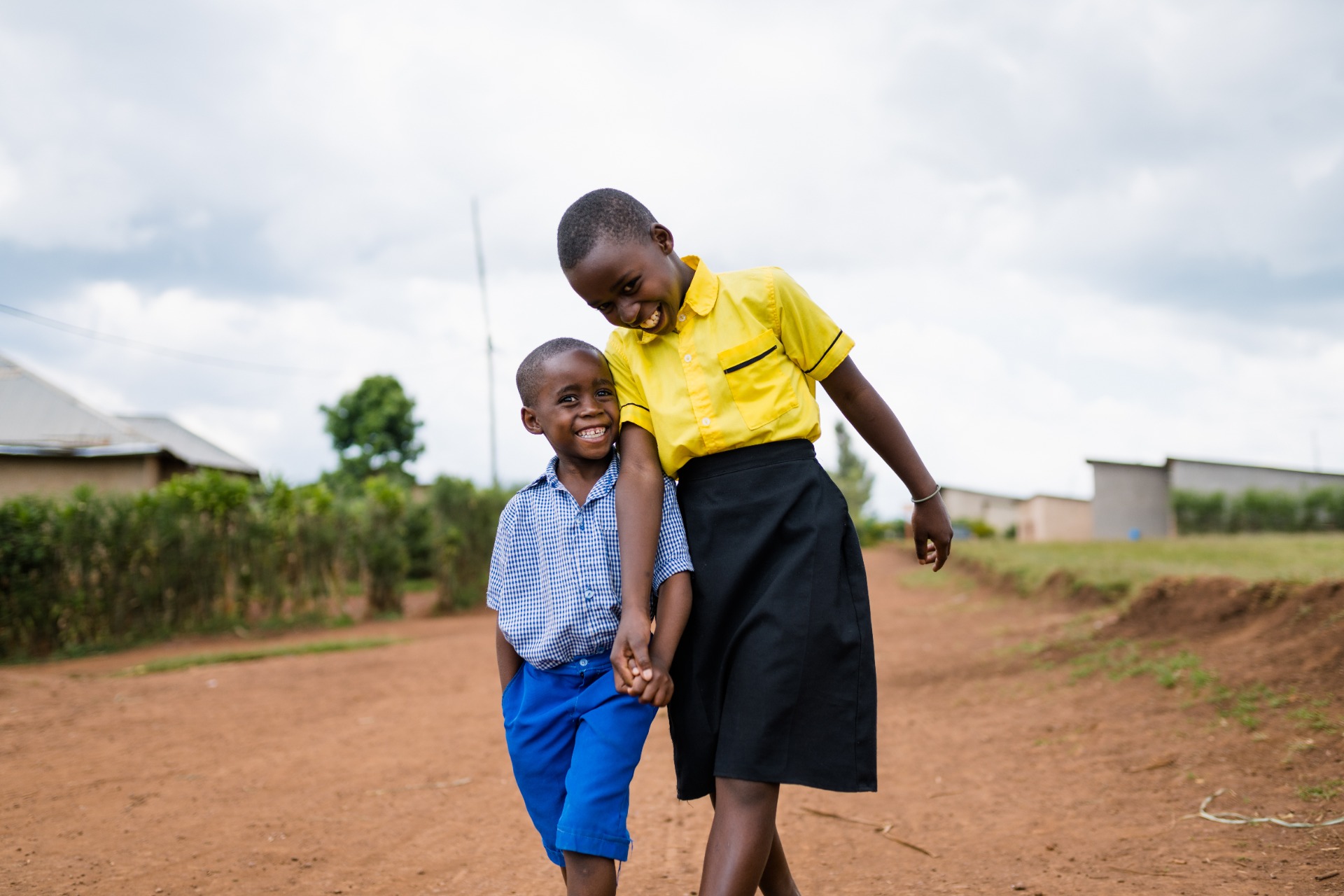
Liliane (11 years old) is one of the children in our programs. She lives with her parents and younger brother in Rwanda.

Liliane goes to school every day. She wants to become a doctor later, and her brother Fabrice wants to become a pilot. But this is not just the story of an eleven-year-old girl. Previously, there was no breakfast, no decent housing, and not enough money for a school uniform and textbooks. Fabrice stayed home because there was no preschool or kindergarten. “My primary school was far away,” Liliane says. “I had to walk three hours every day. It made my legs hurt. Most of the time, I hadn’t had breakfast, and I was often late for school.”

“I had to walk three hours every day. It made my legs hurt.”

Solane, Liliane’s mother, explains: “All the hard work we did on the land was not enough to meet our basic needs. And everyone in our community was in the same boat: not enough food for the children, not enough money for school… We had nowhere to turn, we were completely on our own. I didn’t know what else I could do to change our situation.”

Self-Help Group
Help a Child wants to break the vicious circle of poverty with village programs. Parents come together in Self-Help Groups (SHGs) to work on solutions. “The SHG has been our salvation,” says Solane. She has been a member of the group for three years now, and it has brought her a lot: “The most important thing is that we join forces. We save money together and because of that, I can borrow money to invest. All the small amounts of money we bring together make such a big difference. Before I didn’t know how to deal with problems, now I think in possibilities.”

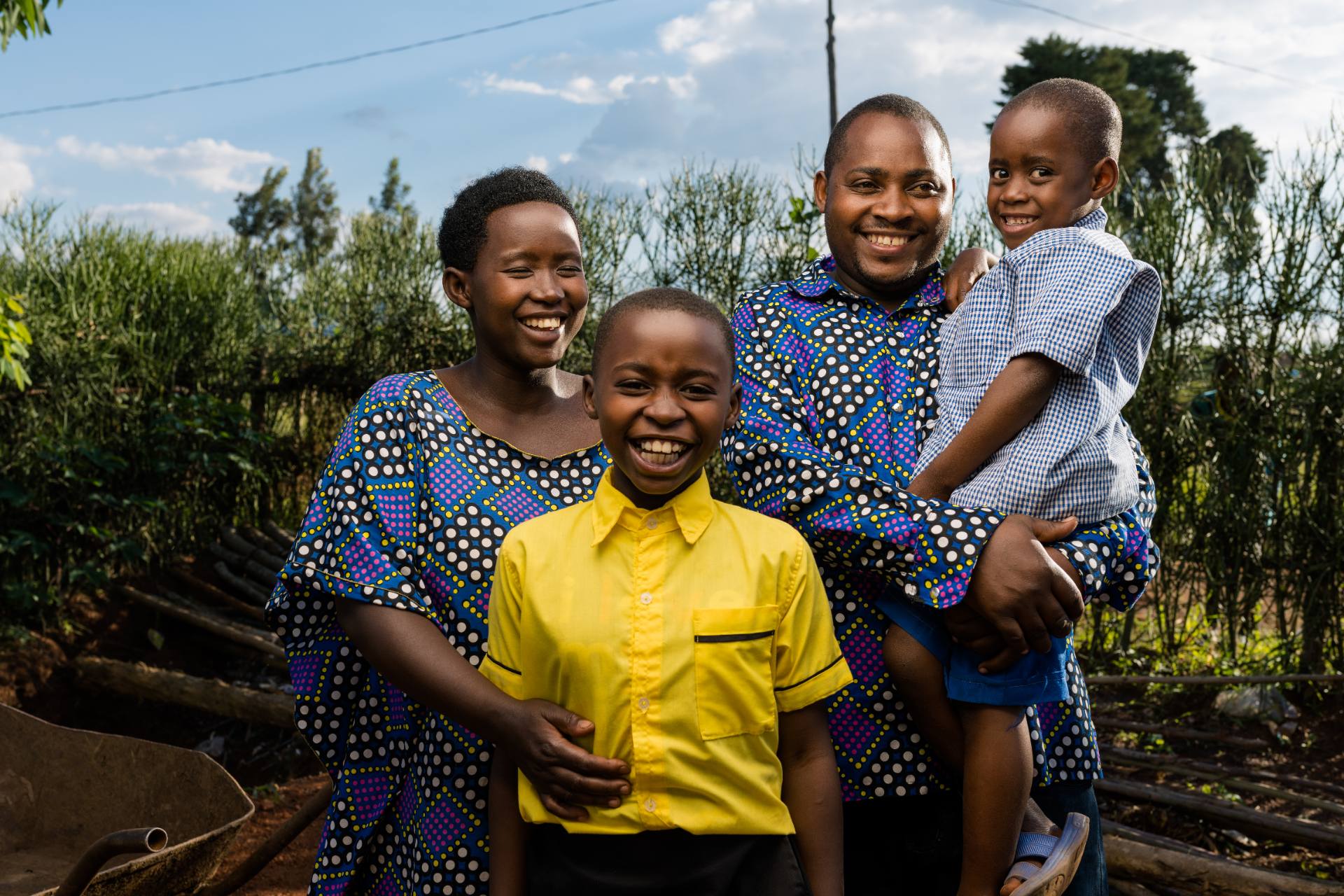
A radiant family
Step by step, the residents of the area are breaking the poverty they live in. And it has an effect on the children! Liliane notices the difference: “Dad and mom can easily buy a school uniform and textbooks for me.” The local government saw the success of the preschool/kindergarten that came through the program and decided to build an elementary school. Liliane says: “Before, I used to come home very late and then I still had to do homework. Then it was difficult to get up very early the next morning to walk to school again. Now it’s nearby.” What a radiant family they are now!

Hope

There are still things the family struggles with, like the lack of water, but life is completely different for Liliane. Her parents see a way out of deep poverty, the total hopelessness has disappeared. That hope is the most important change of all. Mother Solane concludes: “I want my children to grow up healthy and finish their education. My dream is that they will go far!” Thanks to the village program of Help a Child, there is new perspective for Liliane, Fabrice, and their family. We believe that a child is only truly helped when the whole family is doing better. And poverty in families can only be overcome when an entire community changes along.
Peacebuilding programme in Burundi finalist in global ‘World Justice Challenge’

‘Building Bridges in Burundi’ is a programme of the Consortium Help a Child, Cord, AFSC
and Mensen met een Missie, in which young people are central to mitigating armed conflict
and instability in Burundi. This programme has qualified as a finalist in the World Justice
Challenge 2022. The results of the programme show that young people are able to bring
positive change in a protracted and seemingly hopeless conflict.

A strong bridge
A strong bridge isn’t built in a day. The same goes for bridging social differences and mistrust
in a torn society like Burundi. Broken trust, lack of economic opportunities,
transgenerational trauma and a justice system deeply affected by reprisals, corruption and
civil war. This is the challenging context faced by young Burundians looking to build a
livelihood, a future. Building Bridges in Burundi (BBB) has offered these young people a
multidimensional approach to overcoming these barriers. BBB is funded by ‘Addressing Root
Causes’, a fund of the Dutch Ministry of Foreign Affairs, with the aim of mitigating the root
causes of conflict and instability in Burundi.

Conflicts span generations
Self-Help Groups were the starting point of BBB. Clement Nkubizi, Country Director Help a
Child Burundi, says: “By bringing together youth from different backgrounds in Self-Help
Groups, they discovered that they faced the same problems. As a result, prejudices faded or
even disappeared. At the same time, they noticed that they were able to solve concrete
problems together, such as lack of income. Thanks to these groups, young Burundians have
started all kinds of activities, like beekeeping, barbershops, fish-breeding ponds and sewing
workshops.

The programme, which took place in six districts, has lowered the barriers to justice and
reconciliation in several ways. This was done, among other things, by strengthening informal
justice and reconciliation through village elders and churches. In addition, committees were
set up and supervised to help strengthen good governance. Also, mediators were trained
who could assist people in resolving conflicts that sometimes span generations.

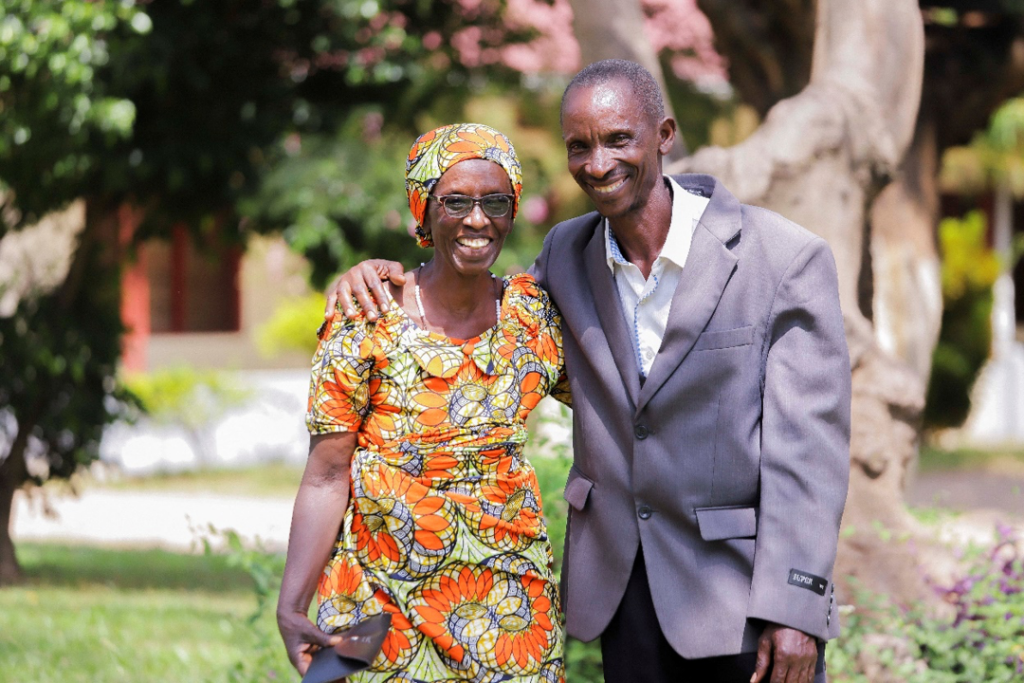
Thanks to the BBB program, relatives Antoinette and Mammert were reunited after a family feud lasting almost forty years.

Increased confidence
The five-year programme ended in December 2021. In these five years, over 10,000
applications for legal support in conflicts have been received by the trained mediators. More
than half of those cases have now been resolved. Other cases have been transferred to the
formal legal system. External research shows that the confidence of the population in formal
and informal forms of justice has increased in more than 90% of the cases. Also, 84% of the
BBB participants indicated that violent conflict in their environment has decreased. Due to
the socio-economic activities in the Self-Help Groups, the average income of young people
has increased sixfold.

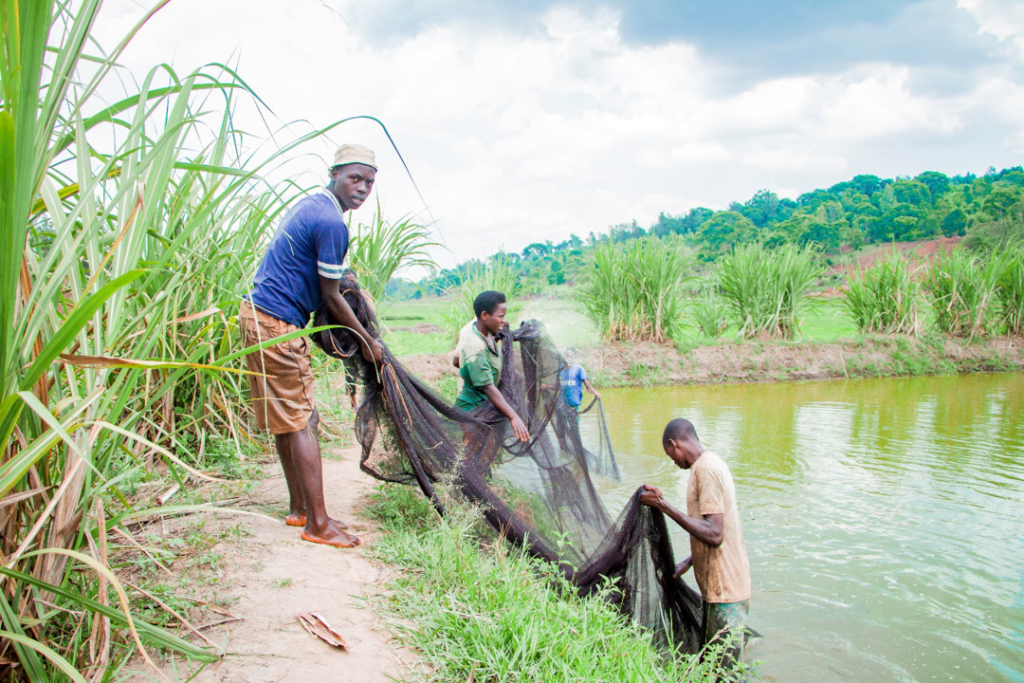
Members of a youth Self-Help Group at work in the breeding pond they maintain together.

Choosing unity over division
The testimonials of young people show the impact of BBB on a personal level. One of the
youth recalls: “Before BBB, I hated anyone of this other ethnicity, following the painful
experiences of my family in the past. When I started to participate in the BBB programme,
everything really changed in me. I have given myself the job of challenging my friends’
convictions as they still see things as I saw them in the past.”

Clement Nkubizi: “I well remember that I visited the village of Kayogoro, Makamba. It was
shortly after the elections, which is always a very turbulent time in our country. The whole
conflict then flares up again and, especially among young people, riots and armed fights
easily break out. I got into a conversation with a local government officer. He said he was
shocked by the fact that there was no unrest anymore among young people in the village.
Under a large prominent tree, the young people were now working on their business
together. Previously, they would visit each other here to stir unrest and riot. He could hardly
believe that this situation could change so much. For me personally, this story, as well as the
many other testimonies I’ve heard and seen, means that there is hope even in the most
hopeless situation. Our country can recover if we choose unity over division.”

World Justice Challenge
Out of 305 entries from 118 countries, the inspiring BBB programme has qualified as one of
thirty finalists in the World Justice Challenge. A leading jury of lawyers, journalists, experts
and politicians will select the five winning initiatives. The competition is part of the World
Justice Forum, which will take place in The Hague from May 31 to June 2 2022.

More information
Building Bridges in Burundi: www.helpachild.org/bbb 
World Justice Challenge: World Justice Challenge 2022 | World Justice Project
World Justice Forum: World Justice Forum 2022 | World Justice Project

Help a Child is now a full Core Humanitarian Standard Alliance member!

Since January 1st, 2022, Help a Child has become a full member of the Core Humanitarian Standard (CHS) Alliance. CHS Alliance is a network of 150 members committed to improving humanitarian & development work through quality, accountability & people management initiatives & standards.

Being a CHS member means that we will continue to keep improving and that we are accountable to all stakeholders involved. That is how we want to provide a future for children in need, their families and their entire community!

Famous Burundians are committed: stop violence against women!

HAGARIKA AMABI | Stop violence against women!

That’s the name of the song that was recently released by many great Burundian female artists. Tetero, Miss Erica, Esther Nish, Gretha, Meili, Olga, Belle 9ice, Channy Queen, Linah Blanche, Ines Raguel, and Mo’W Kanzie sing to raise awareness for gender-based violence. Absolutely wonderful to see them coming together and supporting the work of Help a Child and other partners.

With the release of the song, they kicked off the new Empowered 2 Protect (E2P) program in Burundi. After it was successfully piloted in DRC, E2P will now also be launched in Burundi.

E2P is a community-based SGBV protection awareness package that includes an innovative, non-violent prevention tool: the Invi Bracelet.

But, not only the women came together, various male Burundians also wanted to play their part. In a response video, Big Fizzo, Kolly the Magic, Mutima, Vichou Love, and Kigingi call the men to be responsible and to take care of women. They also address the women, they apologise and vow to protect them.

PMEL News flash: COVID-19 response 2020

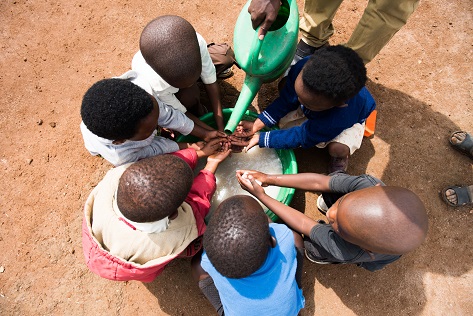
Most of 2020 were taken up by COVID-19, which greatly affected the people in developing countries and also affected the projects of Help a Child. Help a Child did a lot of awareness-raising about COVID-19 and its preventative measures. Almost 150 thousand community members in seven countries were reached by these sessions. We also distributed soap and facemasks and established handwashing facilities. Below you can find a download with all the numbers and figures compiled and analysed by the PMEL (planning, monitoring, evaluation and learning) desk of Help a Child.

Please note: as there was a difference in implemented activities among the countries, partners and projects, the COVID-19 indicators were not mandatory. The data collected comes from Burundi, India, Kenya, Rwanda, Somalia, South Sudan and Uganda. Each country and partner collected data that applied to their specific context.

Help a Child Burundi starts a partnership with UNHCR and WFP

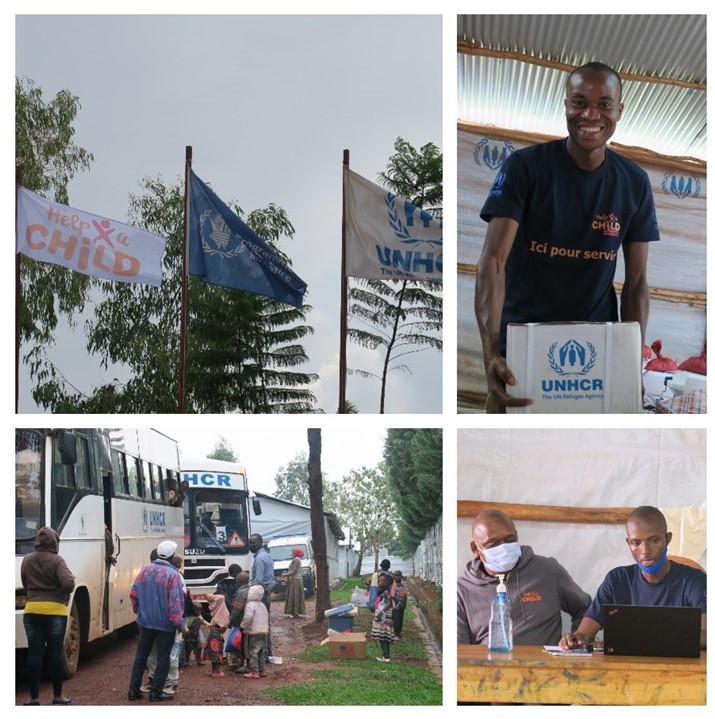
Help a Child Burundi saw its flags raised in 2 refugee camps and 3 returnees’ transit centres in Burundi in November 2021. Help a Child Burundi has started a new partnership with UNHCR and WFP to support refugees, returnees’ families including unaccompanied children. Together with UNHCR and WFP, Help a Child is ensuring the provision of food items and Non-Food items respectively to Refugees and Returnees as well as cash-based interventions to unaccompanied children, ensuring secure and proper orientation of the usage.

Convoy arriving in Kinazi transit centre from Uganda. Help a Child Burundi starts its first mission of distribution.


Appel d’offre pour manifestation d’interet

Dans le cadre de ses projets, Help a Child Burundi lance l’avis d’appel d’offre pour manifestation d’intérêt a figurer sur la liste de ses fournisseurs pour les articles, les services et matériel. Pour plus d’informations, s’il vous plaît ouvrir la pièce jointe.

Date limite
Les offres devront être déposées sous pli ferme au bureau de Help a Child au plus tard Vendredi le 17/09/2021 à 12heures.

Plus d’informations
Pour plus d’informations, vous pouvez vous adresser a l’address ci-après : Tel : 22277830, ou à son bureau au Q Gatoke, Boulevard Mwezi Gisabo N˚ 18 ou par email : info@hacburundi.org.

Help a Child attend de ses fournisseurs qu’ils se comportent avec intégrité ; à ne pas nuire et à prendre soigneusement en compte les droits et intérêts d’autrui. Tout fournisseur sera tenu de signer et d’adhérer au Code de conduite de Help a Child et les fournisseurs retenus seront soumis aux vérifications, y compris la vérification du casier judiciaire.


World Refugee Day Event in Bujumbura

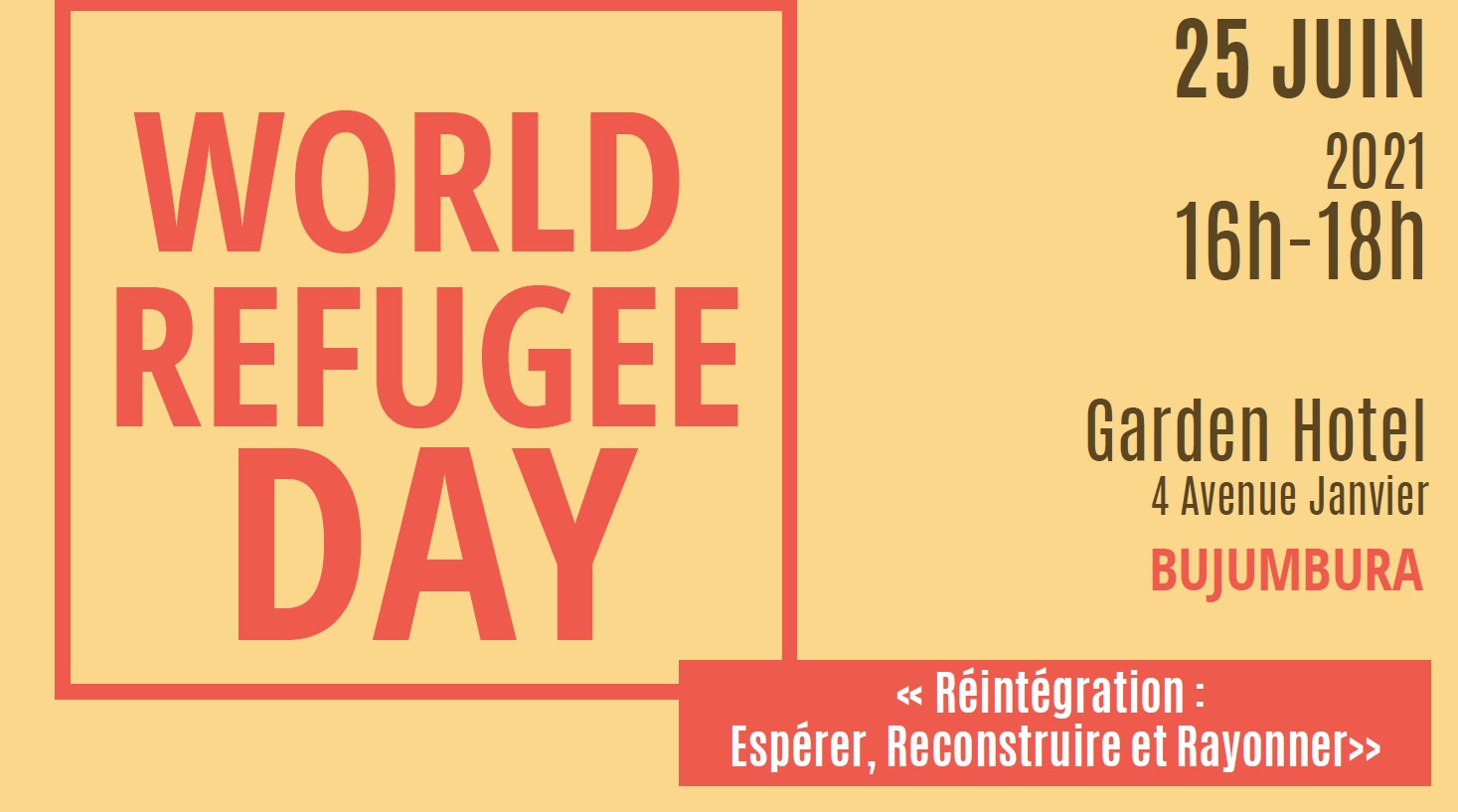
“Réintegration: Espérer, Reconstruire et Rayonner” (“Reintegration: To hope, to reconstruct and to radiate”). That is the theme of the event, organized by Help a Child Burundi on behalf of the Building Bridges in Burundi consortium, held in Bujumbura on Friday June 25.

The main objective of the varied and interactive program is to give information about and to plead for the needs and circumstances of refugees, and in particular returnees in the Burundian context. It also shares insights about holistic management for sustainable reintegration of returnees.

Theatre and a panel discussion are some of the planned activities of this event, that is organized in the week of the International Refugee Day.

Date
Friday 25 June

Time
16.00-18.00

Venue
Garden Hotel, 4 Avenue Janvier, Bujumbura.

Keeping Children Safe Network: full member!

We are delighted to share that Help a Child has become a full member of the Keeping Children Safe (KCS) Network. KCS is an independent not-for-profit, setting out internationally recognised child safeguarding standards that ensure all organisations working directly for and with children have comprehensive safeguarding measures in place. What does our full membership mean for Help a Child and our project participants? A few question for Geert de Jonge:

EU Cord is looking for an Advocacy Coordinator

EU Cord (European Christian Organisations for Relief and Development) is currently recruiting an Advocacy Coordinator. The Advocacy Coordinator will be responsible for providing expert input to direct EU-CORD’s advocacy work and strategic direction for advocacy. The Coordinator will lobby for and represent on behalf of the network and help to build the advocacy capacity of EU Cord members.

Location
Brussels, Belgium

Application deadline
4th of May

More information
Go to the EU Cord website.