Parenting Challenge officially recognized

The Parenting Challenge of Help a Child is officially recognized as a national reference approach in Burundi. This major milestone stems from a need expressed by the Ministry of National Solidarity, Social Affairs, Human Rights, and Gender, through its department responsible for children and families, to establish a national framework to promote positive parenting practices. Recognizing the importance of such a tool in strengthening the well-being of children and families, Help a Child took the initiative to support the Ministry in developing a national harmonised positive parenting module.

The approach focused on adapting and harmonising the Parenting Challenge methodology to fit the Burundian context, while also drawing from existing tools and resources available in the country. Help a Child built synergy with SOS Village d’Enfants, which is currently funded by the European Union Delegation in Burundi, to implement a child-focused project, for technical and financial support for developing the national harmonised parenting module.

The process was highly participatory, involving key stakeholders from the child protection sector. This multisectoral collaboration led to the creation of a document that is coherent, contextually relevant, and consistent with the original Help a Child’s Parenting Challenge approach.

This new national tool is expected to strengthen parenting skills, promote a safe and nurturing family environment, and ultimately support the holistic development of children in Burundi.

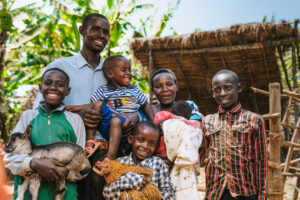
Like father, like family: positive Parenting in Burundi

In Burundi, the Parenting Challenge is an important intervention for reducing violence and increasing the proper care of children. It is combined with PIP, an innovative approach for farmers, where the whole household is involved in improving their farm and thus in improving their own nutrition and income. This holistic approach addresses the root causes of family problems and promotes sustainable change.

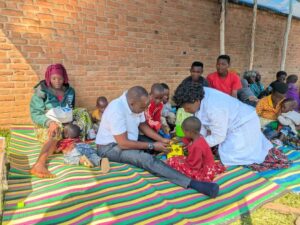
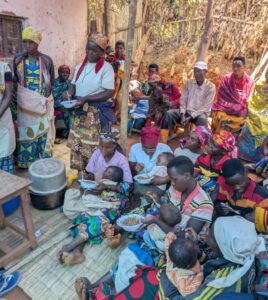
The parenting challenge is a group based programme which supports parents or caregivers in improving their family dynamics. It provides a safe, interactive environment where parents explore their roles, responsibilities and the essentials of raising children well, share experiences and build mutual understanding and respect.

From alcohol and abuse to a successful farm and harmony
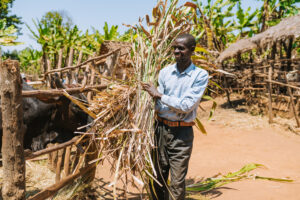
One of the fathers who was part of the Parenting Challenge in Ruyigi shared that he was always drunk, not able to take care of the needs of his wife and children and, therefore, dodged going home and went drinking with his friends instead. This resulted in him coming home late, shouting at his wife and children, and even beating them. On top of that, his farm was not doing well, since all the money was spent on alcohol.

When he joined the Parenting Challenge group, he realized he had to change. The father stopped drinking and stopped beating his wife and children. Instead, he is now supporting them in school. He also followed the PIP training, and together with his wife and children he made a plan for their farm. Their farm is now very successful, with several crops, fruits and animals. The father even managed to buy more land. And most importantly, there’s harmony in the family.

Rêves des Enfants Project is changing lives in Burundi

The Rêves des Enfants project in Burundi aims to promote a multisectoral early childhood development package with a focus on the first 1000 days of a child. It has been a source of hope for many families in Kayanza where the project is being implemented. A joint delegation from the government and UNICEF visited the project this year to see the impact firsthand.

Maternal and child health services
The first stop is the Rwegura Health Centre, a place that has transformed maternal and child health services in the community. It supports pregnant women, from antenatal consultations to assisted childbirth, vaccination and birth registration. Thanks to the project, the health centre has introduced an interoperable system allowing seamless birth registration. Aditionally, a new latrine block has been constructed, providing better sanitation for mothers and children. Nearby, a stimulation and early-learning area has been created, where young children can play and learn, building essential skills.

“Before, we had to travel long distances to register our children, often missing deadlines. Now, everything is done here at the health centre, and it has made life so much easier for us,” a mother shares with a relieved smile.

Nutrition and cognitive and social development
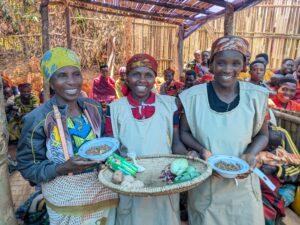
The second stop is a community-based nutritional training centre, where a group of mothers is engaged in a nutrition and behaviour change training session. Among them is a mother who once feared for her child’s health: “A few months ago, my son was weak and unresponsive. He had lost weight, and I didn’t know what to do. But when I brought him here, the caregivers provided us with nutritional support and guidance. After just twelve days, he regained his strength. Today, he is healthy and playful again,” she recounts.


The training centre treats malnourished children and supports them in rehabilitation so they can recover fully. Beyond nutrition, the centre also features a stimulation area, where children are encouraged to explore, play, and interact—critical elements for their cognitive and social development.

Since the start of Rêves des Enfants in 2024, the project has given hope to many children and families in Kayanza. Help a Child is committed to continue working together with its partners Help Channel and SAD to ensure no child is left behind.

Resilience perspective for refugees in Burundi

Refugee support under pressure
In 2021 Help a Child Burundi initiated a Humanitarian and Disaster Response to support improving conditions of refugees by providing food and cash aid in partnership with World Food Program (WFP). Three refugee camps in Ngozi, Muyinga and Cankuzo, with over 33,000 refugees, are currently supported by this. However, the new influx of approximately 71,000 Congolese refugees has put pressure on the limited resources. Food portions have been reduced by 50% to accomodate new arrivals. On top of this, the shrinking of funding exacerbated by the suspension of US reinstallation programs has impacted support for refugees.

Resilience perspective for refugees
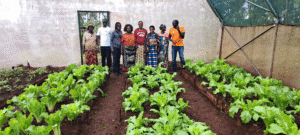
In response to this, Help a Child is establishing vegetable gardens in all three refugee camps through the project “Food assistance and community recovery for populations vulnerable to malnutrition and food insecurity in Burundi”, with a special focus on improving nutrition for women and children. Additionally, Help a Child is advocating for more space to develop agriculture activities and promoting kitchen gardens within the small plots available. Refugees are also being integrated into national social protection systems to increase their resources, through the project “Productive Social Safety and Employment support”.

With these interventions, Help a Child is aiming to bring a resilience perspective for all refugees in Burundi.

A new beginning for 981 IDPs in Burundi

Since September 2023 up to September 2024, Burundi has experienced 257 emergency events resulting in 304,369 affected persons. Natural disasters remain the primary cause of human internal displacement in Burundi, currently amounting to 93% of the IDP cases reported. Rumonge is the most affected province by natural disasters, currently reporting 15,377 IDPs, Cibitoke is second with 13,482 IDPs while Bujumbura Rural reports 12,281 IDPs.

In Rumonge, Cibitoke and Bujumbura Rural, houses, roads, schools and health centers have been destroyed or irremediably damaged by the impact of El Niño; floods, torrential rains, heavy winds, landslides and extended dry seasons. Households in remote areas had limited to no support due to road conditions and accessibility levels.

Help a Child Burundi stepped in to help with cash aid and emergency packages to 147 families consisting of 981 people to address malnutrition, shelter and education needs of the children. Children must always benefit from what we do.

This summer, Help a Child Burundi distributed unconditional multipurpose cash aid to 144 IDP households in Muhuta (Rumonge) and Mutimbuzi (Bujumbura Rural). Each family received BIF 150,000 worth of cash aid. Furthermore, the 120 households displaced by natural disasters in Muhuta received NFI kits. These partial NFI kits were composed of 2 sleeping mats, 2 buckets, 2 Jerrycans, 2 serving spoons, 2 big cooking pots, 2 Solar lamps, 5 plates, 5 cups, 5 spoons and 1 ugali cooking malanchot.

Help a Child concluded the Intango Nshasha intervention with the distribution of 481 partial education kits for IDP children and adolescents out of school or at risk of dropping out of school in Muhuta (Rumonge), Mutimbuzi (Bujumbura) and Murwi in Cibitoke (152 young children between 0-7 years, 164 children between 8-12 years and 165 adolescents between 13-17 years).
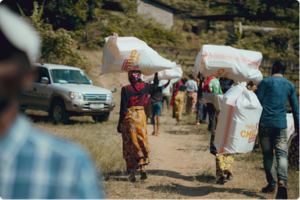
Through the Intango Nshasha (a new beginning) project, 981 IDPs accessed relief aid within the 144 households displaced by natural disasters. Among these, there are 21 widows/widowers, 91 orphans, 14 adolescent mothers, 51 persons living with disabilities, 101 children out of school and 147 unemployed youth.
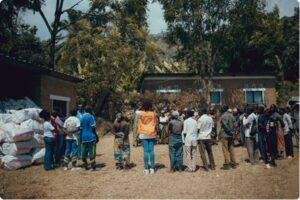


“These families lost everything. Help a Child supported them to get back on their feet with NFI kits and unconditional multipurpose cash aid. They are yet to recover their homes but despite being surrounded by overwhelming challenges, today they know that they are not alone.” – Celia Akimana
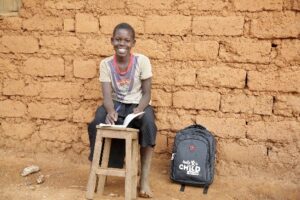


“Since the death of our father (August 2023), my mother has worked tireless but struggled to cover the education, nutrition and health needs of our family. Unfortunately, this year, I was recently kicked out of school for not having school materials. Thank you Help a Child, for supporting me to resume studies”. Niyokwizigirwa Gentile (14 year old student in Murwi)


Climate Change
Burundi produces less than 0.02 percent of global greenhouse gas emission, yet it is deeply affected by climate change in recent years, currently considered among the 20 most vulnerable UN countries vis a vis climate change. The country faces significant roadblocks in addressing the main drivers of natural disasters and climate change due to limited community sensitization, technical knowledge on climate adaptation measures and climate risk monitoring systems.

The nation has adhered to international conventions and developed national policies promoting climate resilience but the elaborated strategies has not been implemented effectively due to significant gaps in terms of investment needed to achieve climate resilience, the green and blue economies vis a vis available funding. The Burundian government and the UN issued a joint statement in April 2024 appeal for support to address Burundi floods however, up to date, there have been limited support mobilized by the international community.

As the Intango Nshasha project comes to end, Help a Child continues to appeal for relief aid and early recovery support towards flood victims and capacity strengthening of communities at risks. As the Intango Nshasha project ends, a new partnership has emerged with WFP through the Merankabandi project. Help a Child is currently doing biometric registration of IDP households in Muhuta with the ambition of supporting the most vulnerable households with unconditional multipurpose cash aid and food aid.

Help a Child Burundi
Help a Child has been working in Burundi since 2016 carrying out community-based relief aid and development interventions in the Early childhood education (ECD), Child Protection, Food Security and livelihoods (FSL), Shelter and non-food items (NFI) and community empowerment sectors.
E2P evidence review publication


We are proud to let you know that we have published our first consolidated evidence review of our Empowered to Protect (E2P) approach, which we implement in the Democratic Republic of the Congo and Burundi.

E2P is Help a Child’s community-based intervention for the prevention of gender-based violence. The initiative revolves around interactive group sessions where participants are encouraged to delve deeply into the root causes of gender-based violence. The program can be combined with distribution of non-violent self-defense tools called the INVI-bracelet to be used as last resort prevention when an attack is already happening.

The critical examination of social and cultural norms and practices raises awareness for gender-based violence, empowering both men and women of the community to recognize and tackle these issues proactively. Through E2P, participants become agents of change in their own environment by making them aware of the ways that they can prevent and respond to gender-based violence, fostering resilience and increasing feelings of safety. It is part of Help a Child’s holistic approach to work for the good of children, families and the entire community.

This paper is not only a summary of our past projects, but a collection of evidence of the impact of E2P, recommendations and lessons learned during the innovation journey.

Read our evidence review report


Help a Child CHS certified

Since January 2024, Help a Child is certified against the Core Humanitarian Standard! We passed the rigorous scrutiny by the independent certification body HQAI – Humanitarian Quality Assurance Initiative. Our certification objectively demonstrates that we comply with the requirements of the CHS. It means that we put affected children and populations at the center of our programmes, include their feedback and opinion in our work and create programmes based on the needs of people. Geert de Jonge, Manager Expertise and Development, tells more about our certification journey during an interview conducted by HQAI.

Why did you decide to go from independently verified to certified?
“The most important pillar of our strategic plan is achieving more quality and impact. Our reason of existence is providing a future for children in need. We do our utmost to accomplish this and quality is our driving force. To aim for certification shows the world that we take our commitment seriously. Being part of a select group of professional organizations that meet this highest standard, motivates us to continue to live up to this ambition. The yearly maintenance audit of certification gives us an extra external drive to make it a continuous priority.”

Can you tell us more about your HQAI certification journey?
“We started our CHS journey in 2019 with our first self-assessment and we repeated this in 2022. Both of these self-assessments have resulted in improvement plans for the organization, pushing us to develop more effective and quality aid. In 2023 we have done the external audit and the reflections of the auditors have helped us to further grow. Looking back at this journey, we really improved in quality in for example Community Based Feedback, Knowledge Management, Disaster Risk Reduction, Partnership Management and communication with communities.”

What were the challenges you encountered?
“The investment of time and resources of the external audit were challenging, but outweighs the benefits of identifying sharp and critical ways of improvement. As a relatively small NGO the CHS pushed us far, but also opened up new avenues for further funding by larger donors enabling us to provide more impact for more children in need.”

What specific improvements have you seen?
“Community Based Feedback: in 2019 this was a completely new topic for us. We have always invited the communities to share their feedback, but now we have been able to setup a clear mechanism for channelling this feedback and responding to that feedback. This is a very visible improvement at Help a Child, from policy level to field level.

Knowledge Management: we realized in 2018 during a synthesis evaluation of all our projects that just creating high quality policy documents is not enough. It is really all about how to ensure we reach the hearts and minds of our field staff so that they understand and live by our philosophy. We introduced all kinds of trainings, information exchange, e-learnings and started with Knowledge Management as an important pillar in our organization.

Disaster Risk Reduction: up to 2019, we were organized in silos: one silo for development programmes and one silo for Disaster Response. Triple Nexus as an important discourse came up in our sector and also CHS pushed us to really connect development with Disaster Response. This resulted in more attention for Disaster Risk Reduction in our development programmes and more sustainability and empowerment approaches in Disaster Response.

Partnership Management: with the support of CHS we have been able to improve on equal partner relationship, and becoming more transparent in the relationship with our implementing partners. Our multi-annual contracts changed accordingly and we have further invested in the relationship with our  implementing partners.

Communication with communities: during the external audit in 2023, we realized we need to improve on the intensity and quality of our communication to our beneficiaries, explaining who Help a Child is as the donor behind our implementing partners and about what integrity means to us. In the following years we  want to further improve quality on this topic.”

What was your experience of collaborating with the HQAI auditors?
“The auditors were incisive and analytically proficient, directing our organization to the right points and ensuring that this did not feel like a paper audit but really contributed to clear areas of improvement at policy and field level. We appreciated their support and their push to further improve our quality.”

What are the expectations from donors now that you will be CHS certified? Do you think they will change?
“We expect more and more donors to adopt the CHS standard and by doing so increase the level of CHS compliance. For us, CHS is the highest quality standard and by adhering to it we see possibilities to further diversify our donor portfolio adhering to the highest compliance requests.”

In summary, what impact has the certification had on your work?
“The process to achieve certification has been very helpful. We now have a clearer understanding of where systems, policies and practices are strong and effective, and where further improvement is needed. The detailed incisive audit report has helped us to improve. The entire process was an excellent opportunity to put the CHS at the forefront in the entire organization and realign our activities and procedures accordingly. The CHS motivates us to walk the extra mile when it comes to meeting the highest quality standards.”

Read the shared interview with Tearfund and the Dutch Relief Alliance


Reports