New ECD Center launched in Nyakiga, Burundi

The future of a nation is shaped long before a child enters a classroom. From conception to age eight, early experiences in health, nutrition, protection, and play determine whether children arrive at school ready to learn or already left behind. That’s why Help a Child focuses on the young child.

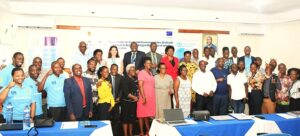
On the 28th January 2026, a new Early Childhood Development (ECD) Center was launched in Nyakiga (Butaganzwa Commune, Buhumuza Province) through the Child Centered Community Development (CCCD) programme implemented by FECABU with the technical and financial support from Help a Child. The event brought together representatives from the Ministries of Education, Human Rights and Health, the Provincial Administration, and OAFLAD/OPDAD, reflecting a shared, multisectoral commitment to young children.
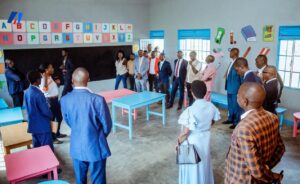
The centre offers high-quality preschool education for children aged 3–5, inclusive play spaces, safe and accessible sanitation facilities, and parental awareness sessions on child protection, health, nutrition, hygiene, and nurturing care. These services are delivered in partnership with decentralised Burundian government services.

As Grâce Nininahazwe, ECD and Child Protection Advisor at Help a Child, highlighted: “This center will support children and parents, especially pregnant and breastfeeding women through health, nutrition, protection, and education tailored to children’s developmental needs.”

Echoing this, Malysie Hatungimana, Director of Preschool and ECD at the Ministry of Education, added: “Children learn through games and songs. Play develops language, social skills, and respect for rules, while helping detect early learning challenges and reducing school dropout rates.”
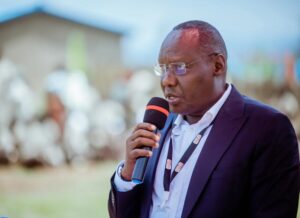
In turn, Fulgence Ndagijimana, Country Director of Help a Child Burundi, encouraged students of all levels from preschool onwards to continue their education to prepare for a better future. He further emphasised that the Nyakiga ECD Center demonstrates how community-anchored, multisectoral approaches can simultaneously protect, nurture, and educate children. This aligns with Burundi’s National ECD Strategy (2021–2027) and global commitments under SDG 3 (Good Health & Well-Being) and SDG 4.2 (Early Childhood Education), showing that investing early is not just ethical, it’s strategic.

In conclusion, Richard Butoke, Head of School Administrative Action at the Ministry of National Education and Scientific Research, stated: “This space is not just a building; it is the symbol of a collective commitment to the future of our children.”

By bringing together families, communities, and government services, the center is more than infrastructure, it is a foundation for resilient, thriving children and a stronger society.
Providing life-saving support in Burundi and DRC

The Dutch Relief Alliance (DRA) started an Acute Joint Response in Eastern DRC and Burundi, with Help a Child as the lead organisation. Tens of thousands of refugees are in dire need of humanitarian assistance; there is a lack of food, healthcare services, sanitary services and safe shelter.

Fleeing the fighting between rebels and government forces, people often left without taking anything, and the camps or locations where they arrive are not suitable for hosting this many people. Especially women and children are at risk of (sexual) violence, many children have been separated from their families, and there is a high risk of disease outbreaks. Urgent humanitarian support is needed to address this crisis in both the DRC and Burundi.

The Joint Response covers areas in Uvira territory in the DRC, and Bujumbura and Buhumuza province in Burundi. We work together with partner organisations Oxfam Novib, Stichting Vluchteling, Tearfund, War Child and World Vision. With this response, we will reach 147,169 vulnerable people, and the programme will run until 23 June 2026.

Tessa Teurlings, coordinator programmes and partners: “We are grateful to be able to work on this much-needed acute response in Burundi and DRC, to help people who have been forced to flee their homes, often not for the first time. Help a Child will focus on the protection of children, aiming to reunite them with their families and provide psychosocial support in this dire situation.”

For more information on this response, follow this link.


Parenting Challenge officially recognized

The Parenting Challenge of Help a Child is officially recognized as a national reference approach in Burundi. This major milestone stems from a need expressed by the Ministry of National Solidarity, Social Affairs, Human Rights, and Gender, through its department responsible for children and families, to establish a national framework to promote positive parenting practices. Recognizing the importance of such a tool in strengthening the well-being of children and families, Help a Child took the initiative to support the Ministry in developing a national harmonised positive parenting module.

The approach focused on adapting and harmonising the Parenting Challenge methodology to fit the Burundian context, while also drawing from existing tools and resources available in the country. Help a Child built synergy with SOS Village d’Enfants, which is currently funded by the European Union Delegation in Burundi, to implement a child-focused project, for technical and financial support for developing the national harmonised parenting module.

The process was highly participatory, involving key stakeholders from the child protection sector. This multisectoral collaboration led to the creation of a document that is coherent, contextually relevant, and consistent with the original Help a Child’s Parenting Challenge approach.

This new national tool is expected to strengthen parenting skills, promote a safe and nurturing family environment, and ultimately support the holistic development of children in Burundi.

A fair start for every child in Rwanda

We’re proud to announce that Help a Child will play a crucial role in the implementation of a new, ambitious programme in Rwanda aimed at creating better opportunities for young children.

The goal of this programme, which is granted by the Education Outcomes Fund (EOF), is to improve the quality of Early Childhood Education (ECE) across 130 ECD-centres, reaching 25,000 children in 390 community-based centres in the coming three years. It is more than just a project; it’s a commitment to inclusive, high-quality education for every child, regardless of ability or background.

Like father, like family: positive Parenting in Burundi

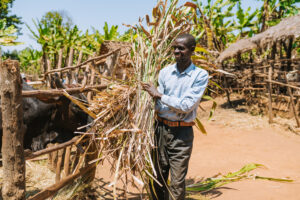
In Burundi, the Parenting Challenge is an important intervention for reducing violence and increasing the proper care of children. It is combined with PIP, an innovative approach for farmers, where the whole household is involved in improving their farm and thus in improving their own nutrition and income. This holistic approach addresses the root causes of family problems and promotes sustainable change.

The parenting challenge is a group based programme which supports parents or caregivers in improving their family dynamics. It provides a safe, interactive environment where parents explore their roles, responsibilities and the essentials of raising children well, share experiences and build mutual understanding and respect.

From alcohol and abuse to a successful farm and harmony
One of the fathers who was part of the Parenting Challenge in Ruyigi shared that he was always drunk, not able to take care of the needs of his wife and children and, therefore, dodged going home and went drinking with his friends instead. This resulted in him coming home late, shouting at his wife and children, and even beating them. On top of that, his farm was not doing well, since all the money was spent on alcohol.

When he joined the Parenting Challenge group, he realized he had to change. The father stopped drinking and stopped beating his wife and children. Instead, he is now supporting them in school. He also followed the PIP training, and together with his wife and children he made a plan for their farm. Their farm is now very successful, with several crops, fruits and animals. The father even managed to buy more land. And most importantly, there’s harmony in the family.

The impact of Self-Help Groups in Kenya

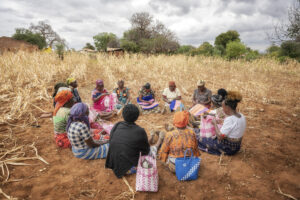
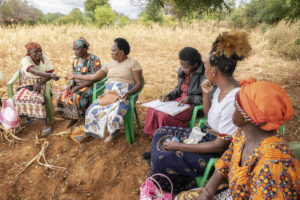
In Kenya, Help a Child works with Self-Help Groups (SHGs). These groups exist within communities to support each other. They enable people to save money and issue loans to group members. In this way, opportunities arise for themselves and their families to start a (small) business, pay medical bills, or pay for education.

In 2024, the team of Help a Child Kenya supported the on-site strengthening of Self-Help Groups to ensure their smooth functioning and addressed their challenges in running the groups.

Impact in 2024
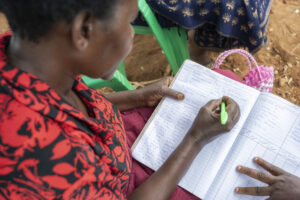
72 Self Help Groups were sensitized on financial literacy, goal setting, and income generating activities. This led to an improvement in SHG capital from KES 6,237,829 (€ 41,586) in 2023 to KES 9,732,957 (€ 64,887) in October 2024. The group members’ involvement in savings and loan uptake and the initiation of individual Income Generating Activities (IGAs) has improved the care of children and the provision of their children’s needs. The programme also facilitated refresher training for 158 SHG leaders on record keeping, conflict management, and goal setting. This has helped them to enhance their record-keeping skills and the development of smart goals amongst SHGs.


A good start in life: birth registration in DRC

The Democratic Republic of Congo (DRC) is facing many problems. Because of the mineral-rich soil, there are many countries interested in this part of Africa. And that causes ongoing conflicts with many armed groups fighting each other, resulting in many problems for the population. One of those problems is the registration of newborn children.

Normally, children are registered when they are born in the hospital or at home. This registration, although a simple act in itself, is vital during the rest of a child’s life. It provides an identity, but also a document that is necessary to be able to register for school, obtain identity papers and register for a job. However, according to data collected by UNICEF, only 40% of children have their birth registered. Because of the decades-long conflict, birth registration is not always possible, for various reasons: people have to flee, papers get lost or the hospital lacks the supplies or personnel needed for registration.

310 new birth certificates
The Help a Child team in DRC decided, together with the local authorities, to help children to get registered, even when they are already somewhat older. This includes an investigation to check facts provided by the children and their caregivers, but after that they get this important document: the birth registration. Since then 310 birth certificates have been rendered, giving these children a good start in life.


Harmony in the house in Uganda

Parenting is a journey and it’s even more rewarding when both parents are involved. However, in Uganda poor parenting is a major concern: 85% of children experience violent punishments by parents or caregivers. Because many parents have difficulties to make ends meet, they turn to alcohol which leads to an increase in domestic violence, teenage pregnancies, and school dropouts, robbing children of their future. That’s why AEE Uganda started an intervention called the Parenting Challenge, designed by Help a Child.

The parenting challenge is a group based programme which supports parents or caregivers in improving their family dynamics. The programme provides a safe, interactive environment where parents explore their roles, responsibilities and the essentials of raising children well, share experiences and build mutual understanding and respect. This holistic approach addresses the root causes of family problems and promotes sustainable change

Change is happening
The results are tremendous: both parents and children report far less violence in their families (towards children but also between parents themselves), better listening, and more working together. Families are transforming and children are finding hope. Together they can break the cycle and create harmony in the house, for generations to come.


Short documentary about the parenting challenge:


Lifesaving flood response in Somalia

In 2024, Help a Child and Medair brought lifesaving Health and WASH services to flood-affected communities in Baardheere and Kismayo in Somalia. Over 33,700 people received essential support, including maternal and child healthcare, immunizations, antenatal services, malnutrition referrals, and improved hygiene and shelter assistance.

Health workers trained in integrated childhood illness protocols operated three mobile clinics that reached remote villages cut off by floodwaters. Three flood-damaged health facilities were repaired to bolster local healthcare capacity. A new Postnatal Care ward was constructed in Shaqalaha, and an additional room was added at Abdalla Birole to handle the growing patient load triggered by the influx of IDPs.

The fight against Cholera
To combat cholera, a new treatment unit and three oral rehydration points were established, serving nearly 1,800 patients and keeping fatalities below 0.2%. In parallel, 3,000 hygiene kits were distributed, reaching 20,360 individuals, while 2,000 IDP households received shelter kits, benefiting 13,340 people. Community health workers, supported with training and incentives, played a key role in raising awareness of cholera prevention, safe water use, and sanitation. Aditionally, gender and protection concerns were integrated, focusing on women-headed households and training staff in basic protection guidelines.

The holistic approach of combining mobile outreach, facility rehabilitation, and WASH measures has strengthened resilience in Somalia’s hardest-hit regions. Through this collective effort, Help a Child and Medair have ensured that families facing displacement and ongoing floods could access the vital support needed for recovery.

ECD priority in future education South Sudan

Early Childhood Education (ECD) and care are receiving growing attention in South Sudan, thanks to the current role of Help a Child South Sudan as a lead and Board Chair of the National Education Coalition. However, most young children still have no access to proper education because of a lack of ECD centres.

With the privately funded Kids@Risk project, combined with UNICEF funding, Help a Child is a key player in expanding ECD services across South Sudan and one of the main organizations investing in ECD in South Sudan. Activities focus on the establishment of ECD centres, integrating Early Childhood Education, Child Protection activities, and food provision through tree planting and vegetable gardening around the ECD centres, fostering education, nutrition, and sustainability for a brighter future for South Sudan’s children.

The establishment of four highquality ECD facilities, caregiver training, and ECD child enrolment has sharpened our focus and is expected to influence our future in the years to come. Donors such as UNICEF and local authorities in underserved areas like GPAA are drawn to the proposed convergence of ECD, Parenting, and Child Protection. The high calibre of the pilot work has earned us a solid reputation and has made us the standard with regard to the importance of an inclusive approach to ECD.