For a high resolution visual, click here.
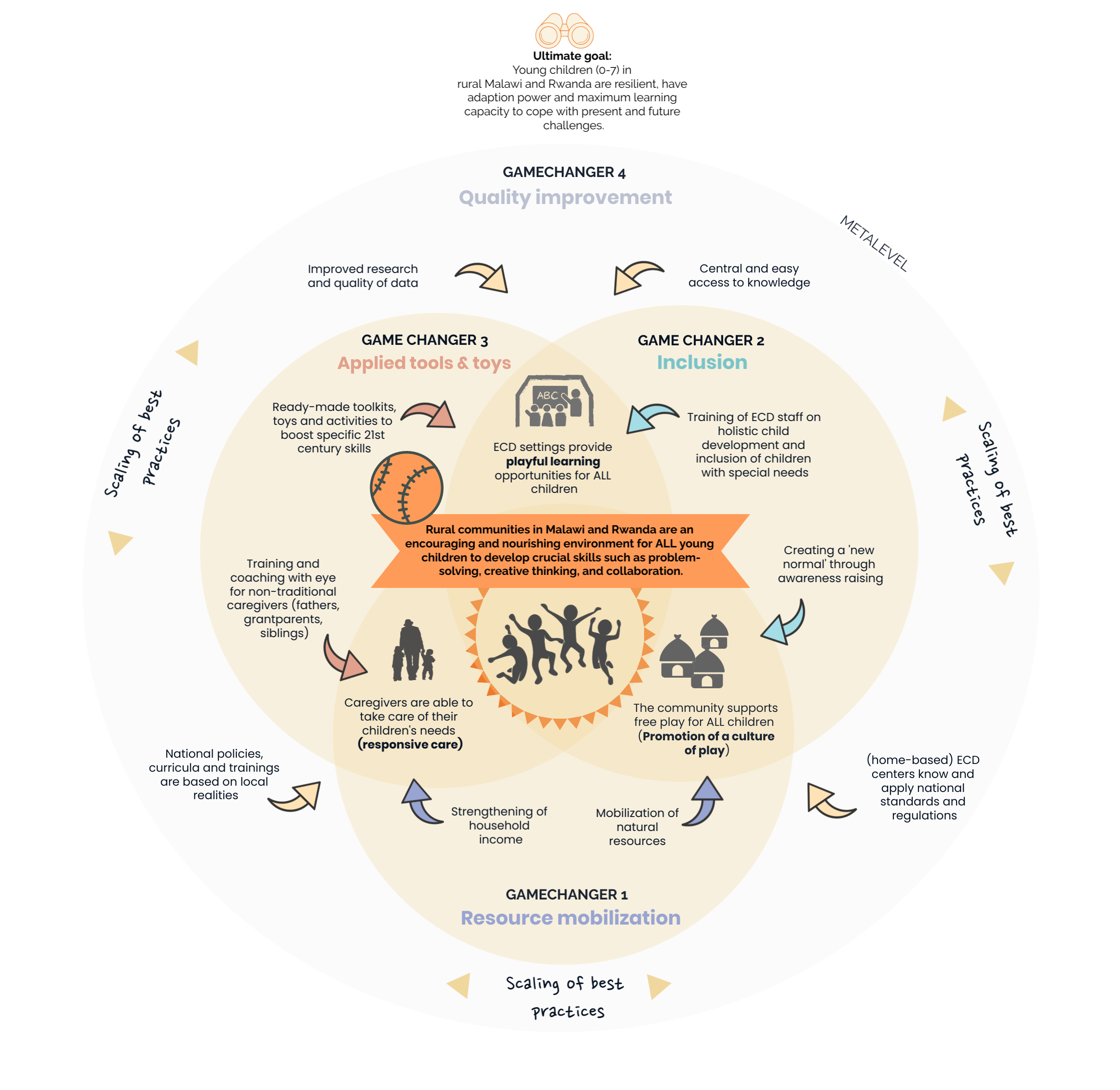
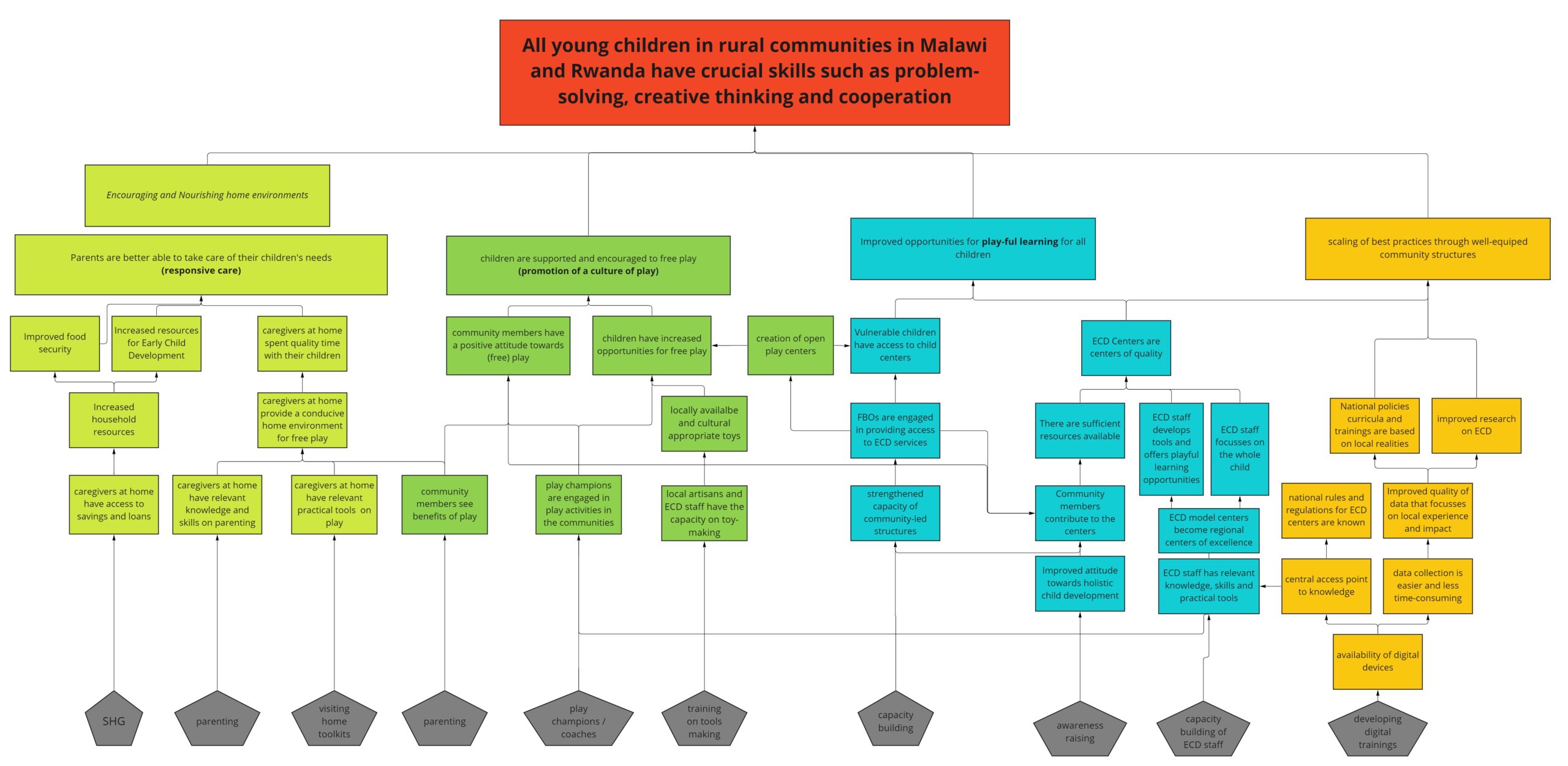
Long-term impact: All young children in communities in Malawi and Rwanda have crucial skills such as problem-solving, creative thinking and cooperation
Outcomes
1: Families are better able to take care of children
Intermediate outcomes:
- Through ensuring families are part of adapted self-help/savings groups, household income and community resources increase. Through self-help group training/parenting interventions household income is invested in young children
- Through learning by doing in free play, playful parenting and inclusion through (government supported) home-visiting programs, coaches and parenting courses caregivers spend quality time with their children.
2: Children are encouraged to play freely
Intermediate outcome:
- Through setting up play centres at religious, community or ECD centers and through outreach to fathers by ‘play champions’, toy-making, and intergenerational play activities children have increased opportunities for free play.
3: Improved opportunities for playful learning for ALL children
Intermediate outcomes:
- Through business development for ECD, ensuring they run on parents-fees, in-kind support (food, maintenance) and community infrastructure, centers can operate without needing (substantial) external funding, ensuring that all children have access to child centers.
- Through including 21st-century skills and free play, inclusion of children with disabilities in teacher training, through involving ECD staff with play-centers, ECD centers are centers of quality.
4: Scaling of best practices through well-equipped structures
Intermediate outcome:
- Through supporting ECD staff to access digital platforms that are used for training, sharing data for monitoring and through connecting ECD-actors at (inter)national levels policies, trainings and curricula are based on local evidence and research on ECD is improved.